Mandala: A Timeless Script Font for Elegant Design
In the world of typography, certain fonts stand out not just for their visual appeal but for their ability to evoke emotion and convey a sense of sophistication. Mandala is one such font—a script that blends elegance with clarity, making it an ideal choice for a wide range of design projects. Whether you're working on a wedding invitation, a branding campaign, or a personal project, Mandala offers a unique blend of beauty and functionality that can elevate any design.
The Essence of Mandala
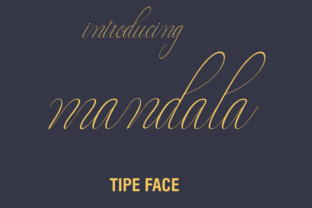
Mandala is a thin calligraphy-styled script that exudes grace and refinement. Its delicate strokes and flowing lines give it a soft, romantic feel, which makes it particularly well-suited for designs that aim to communicate love, artistry, or serenity. The font's structure is both intricate and readable, allowing it to maintain its aesthetic appeal without sacrificing legibility. This balance between form and function is what sets Mandala apart from other script fonts.
One of the most striking features of Mandala is its versatility. While it may appear to be a purely decorative font, it can also be used in more formal contexts. For instance, it works well in headers, titles, and captions where a touch of elegance is needed. Its thin weight allows it to pair seamlessly with other typefaces, making it a valuable asset in multi-font compositions.
Characteristics That Define Mandala
When examining Mandala closely, several key characteristics become apparent. First, the font's thin stroke weight gives it a light and airy appearance, which can be especially effective in minimalist designs. This characteristic also helps to create a sense of openness and clarity, even when the font is used in longer text blocks.
Another defining trait of Mandala is its calligraphic style. The font mimics the fluidity of hand-drawn script, with subtle variations in line thickness that add depth and movement. These details make Mandala feel more organic and human, rather than rigid and mechanical. This quality can be particularly appealing in designs that seek to convey authenticity or creativity.
The font's letterforms are also designed with a strong emphasis on symmetry and proportion. Each character is carefully crafted to maintain a harmonious balance, ensuring that the overall composition remains visually pleasing. This attention to detail is especially important in applications where typography plays a central role, such as logos, book covers, and editorial layouts.
Applications of Mandala in Design
The adaptability of Mandala makes it suitable for a wide array of design applications. In the realm of graphic design, it is often used in branding materials, such as business cards, posters, and packaging. Its elegant appearance can help to establish a brand's identity as sophisticated and refined. For example, a boutique clothing store might use Mandala in its logo to communicate a sense of luxury and craftsmanship.
In the field of web design, Mandala can be used to create visually appealing headings and subheadings. When paired with a sans-serif font for body text, it can add a touch of personality to a website without overwhelming the reader. This combination is particularly effective in creative portfolios, where the goal is to showcase artistic talent and individuality.
For print media, Mandala is a popular choice in wedding invitations, thank-you notes, and greeting cards. Its romantic aesthetic aligns perfectly with the themes of love and celebration, making it a go-to font for couples looking to personalize their special day. Additionally, its readability ensures that important information, such as dates and locations, remains clear and easy to read.
Best Practices for Using Mandala
While Mandala is a beautiful font, it is important to use it strategically to achieve the best results. One key consideration is the size at which it is used. Due to its thin weight, Mandala can become difficult to read when scaled down too much. It is recommended to use it in larger sizes for headings and titles, while reserving smaller sizes for short phrases or decorative elements.
Another best practice is to pair Mandala with complementary typefaces. As mentioned earlier, combining it with a sans-serif font can create a balanced and modern look. However, it is also possible to pair it with other script fonts for a more cohesive and stylized appearance. The key is to ensure that the overall design remains legible and aesthetically pleasing.
Additionally, designers should consider the context in which Mandala is being used. For example, if the font is being used in a corporate setting, it may be necessary to adjust its presentation to align with the brand's tone and message. In such cases, using Mandala in a more subdued way—such as in a subtle background texture or as a border element—can help to maintain professionalism while still incorporating its elegance.
Why Mandala Stands Out
Mandala's popularity among designers is not merely due to its visual appeal; it is also valued for its ability to enhance the emotional impact of a design. The font's flowing lines and delicate strokes can evoke feelings of calm, romance, and sophistication, making it a powerful tool for storytelling through typography.
Furthermore, Mandala's versatility ensures that it remains relevant across different design trends and styles. Whether a designer is working on a vintage-inspired project or a contemporary layout, Mandala can be adapted to fit the desired aesthetic. This flexibility makes it a reliable choice for both beginners and experienced designers alike.
Another reason why Mandala continues to be a favorite is its availability. As a digital font, it can be easily accessed and integrated into various design software, including Adobe Creative Suite, Figma, and Canva. This accessibility allows designers to experiment with the font in different contexts, further expanding its potential applications.
Conclusion
Mandala is more than just a font—it is a design tool that can bring a sense of elegance and creativity to any project. Its unique combination of beauty and functionality makes it a valuable asset for designers across industries. By understanding its characteristics, applications, and best practices, users can harness the full potential of Mandala to create visually compelling and emotionally resonant designs. Whether used in a subtle background or as a bold headline, Mandala has the power to transform ordinary text into something truly special.