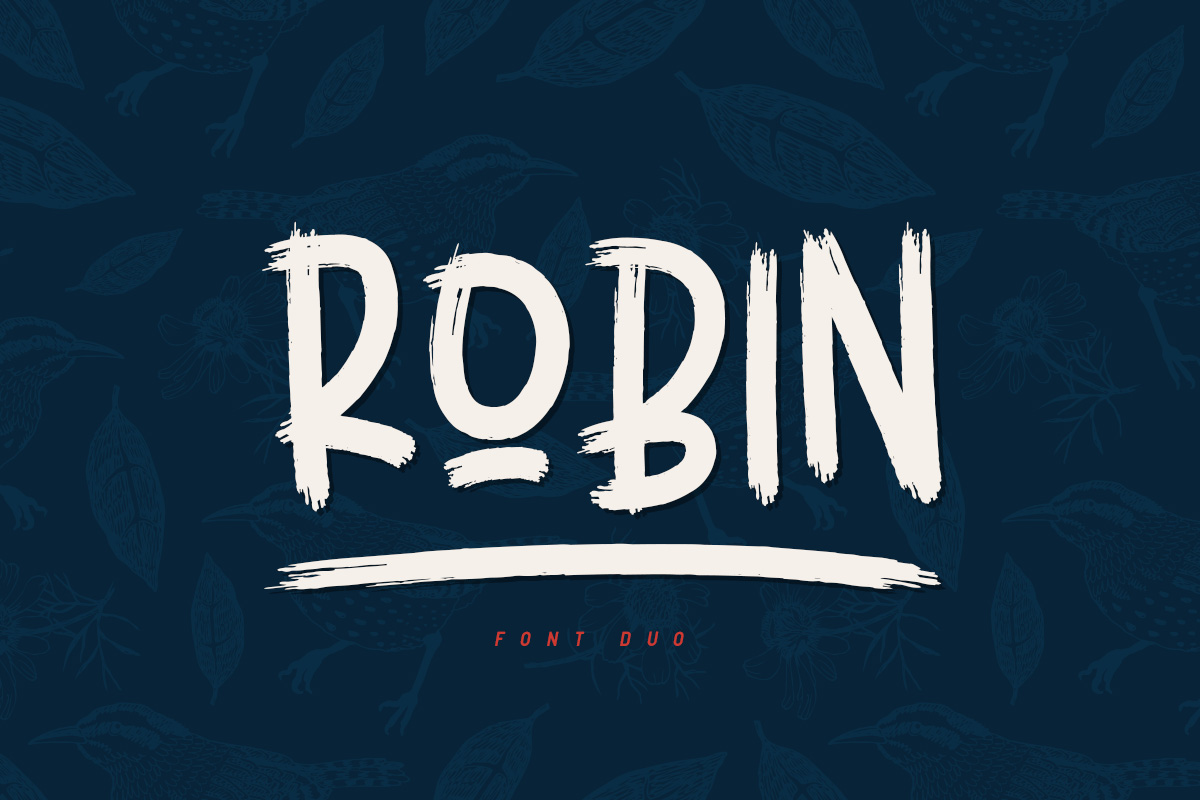
Robin: A Bold, Dynamic Brush Font for Creative Workflows
Robin is a hand-drawn brush font that brings a sense of energy and personality to any design. Its bold strokes and dynamic flow make it ideal for display purposes, offering a unique visual identity that stands out in a sea of standard typefaces. Whether you're working on branding, editorial layouts, or digital content, Robin can add depth and style to your projects with ease.
This font isn’t just about aesthetics—it’s about functionality. Designed with exceptional taste, Robin is crafted to fit into real-world workflows, supporting both creative and professional tasks. From the initial planning stages to final execution, Robin can enhance your process without disrupting it.
For designers, marketers, and content creators, Robin offers a versatile tool that can be used at multiple points in a project lifecycle. It can serve as a starting point for visual concepts, a finishing touch for final outputs, or even a consistent element across multiple assets. Understanding how to integrate Robin into your workflow can lead to more cohesive and impactful designs.
Robin in the Design Process
When working on a new project, the choice of typography often plays a crucial role in setting the tone. Robin can be introduced early in the ideation phase, helping to visualize the aesthetic direction of a brand or campaign. Its brush-like strokes evoke a sense of creativity and movement, making it a strong candidate for concept sketches, mood boards, or storyboarding sessions.
As the project progresses, Robin can be used to refine and finalize elements. For instance, in a print or digital ad campaign, Robin might be applied to headlines or call-to-action text, providing a bold and memorable presence. Its readability at larger sizes ensures that it remains effective even when used prominently.
For digital designers, Robin can also be integrated into UI/UX elements. While it may not be suitable for body text, it can be used for headers, buttons, or decorative accents. Pairing it with a more neutral sans-serif font can create a balanced look that maintains clarity while adding visual interest.
Workflow Integration and Practical Use Cases
Robin’s versatility makes it a valuable addition to various workflows. In marketing, for example, it can be used to create eye-catching social media posts, email newsletters, or promotional banners. Its hand-drawn feel adds a personal touch that can resonate with audiences looking for authenticity and creativity.
For bloggers and content creators, Robin can elevate the visual appeal of blog headers, infographics, or website copy. When paired with a clean, modern font, it can create a contrast that draws attention without overwhelming the reader. This balance is key to maintaining readability while still expressing individuality.
Freelancers and small business owners can benefit from using Robin in branding materials. Whether designing a logo, business card, or website, Robin can help establish a distinct visual identity. Its bold nature makes it well-suited for logos that need to stand out, especially in environments where quick recognition is important.
Compatibility and Technical Considerations
Before incorporating Robin into your workflow, it’s important to consider its compatibility with different platforms and software. Most design tools—such as Adobe Photoshop, Illustrator, and Canva—support custom fonts, making it easy to apply Robin to various projects. However, ensuring that the font is properly installed and licensed is essential for smooth integration.
When using Robin in digital formats, such as web design or video editing, it’s important to check how the font renders across different devices and screen sizes. While Robin is designed to be legible at larger sizes, it may not perform as well in smaller contexts. Testing its appearance in various scenarios can help avoid unexpected issues.
For print projects, Robin’s brush-like texture can add a tactile quality that enhances the overall design. However, it’s important to ensure that the font is high-resolution and properly scaled to maintain clarity in printed materials. Working with a professional printer or using vector-based formats can further improve the results.
Combining Robin with Other Tools and Resources
Robin works best when combined with other design elements and tools. For instance, pairing it with a minimalist layout or a limited color palette can allow the font to take center stage. On the other hand, using it alongside other expressive typefaces can create a layered and dynamic composition.
Designers often use Robin in conjunction with illustration or photography to create a cohesive visual language. Whether it’s a magazine spread, a poster, or a presentation, the combination of Robin with other visual elements can enhance storytelling and engagement. This approach is particularly effective in creative industries where visual impact is critical.
In collaborative settings, Robin can serve as a unifying element across team projects. By establishing a shared typographic style, teams can maintain consistency while still allowing for individual expression. This is especially useful in branding campaigns or multi-platform content strategies where uniformity is key.
Long-Term Use and Maintenance
When using Robin over an extended period, it’s important to maintain its integrity and relevance. Regularly reviewing how it performs in different contexts can help identify areas for improvement or adjustment. For example, if a project requires a more formal tone, switching to a serif font might be more appropriate, while Robin could still be used for secondary elements.
Keeping track of font updates and variations can also enhance long-term usability. Some fonts offer multiple weights or styles that can expand their application. Exploring these options can provide more flexibility and adaptability in future projects.
Finally, documenting how Robin is used within your workflow can help streamline its implementation. Creating a style guide or reference sheet can ensure that all team members understand its proper usage, leading to more consistent and effective results.